Contribution of teacher inquiry topics to my communities of practice
Communities of Practice and Teacher Inquiry
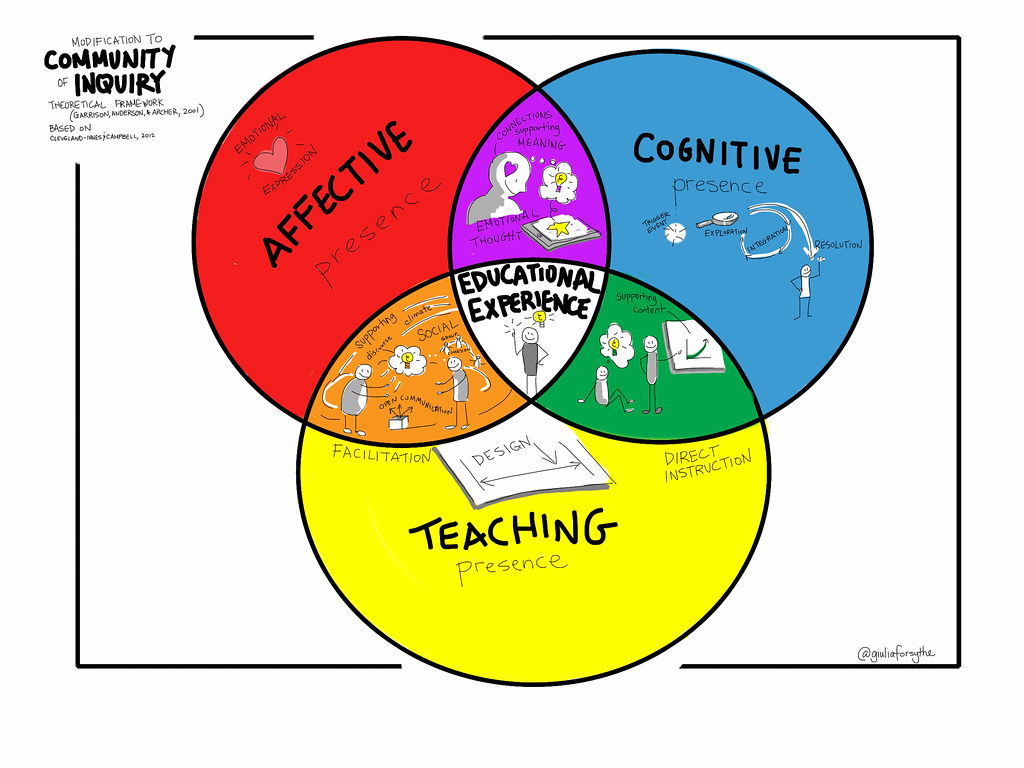
In looking at and thinking about Communities of Practice; 2 Teacher Learning inquiry topic ideas stood out to me from those floated by our MindLab Community.
1. Is collaboration the best way to improve Male Pasifica students achievement?
This inquiry topic idea in and of itself could be expanded to include both male and female students and perhaps students generally rather than a specific subset. However, as a possible inquiry I think it
provides a very interesting idea to explore for a CoP (Community of Practice).
The NZ MoE (Ministry of Eduction) is very supportive of practice/s that seek to improve the outcomes for Pasifica students and Maori students. So inquiry into the best methods by which these students might learn would be of great benefit to members of a CoP, seeking to find better outcomes for students. Inquiry into and sharing of ideas towards a goal of improving outcomes for students [Pasifica in particular] would allow for CoP members to engage, as they feel most comfortable, with the process. At the same time, all would benefit from the ideas, strategies, and innovations thus discussed, discovered, or formulated. As is talked about in the video " Cultivating communities of practice: Making them grow" (Knox. B, 2009). We need to allow members of the community to take on the roles that they feel most comfortable with. Some watering, some weeding, and some watching. Without creating the pressure of “you are part of the community therefore you must contribute” you allow the ideas to flow, relationships to form and discussions to happen naturally. In this way the CoP members all will feel included and are more likely to want to drive the inquiry and thus find ways in which they can contribute. Without the pressure of having to conform to a given set of commitments you are more likely to get truly useful and effective inquiry in a CoP.
provides a very interesting idea to explore for a CoP (Community of Practice).
The NZ MoE (Ministry of Eduction) is very supportive of practice/s that seek to improve the outcomes for Pasifica students and Maori students. So inquiry into the best methods by which these students might learn would be of great benefit to members of a CoP, seeking to find better outcomes for students. Inquiry into and sharing of ideas towards a goal of improving outcomes for students [Pasifica in particular] would allow for CoP members to engage, as they feel most comfortable, with the process. At the same time, all would benefit from the ideas, strategies, and innovations thus discussed, discovered, or formulated. As is talked about in the video " Cultivating communities of practice: Making them grow" (Knox. B, 2009). We need to allow members of the community to take on the roles that they feel most comfortable with. Some watering, some weeding, and some watching. Without creating the pressure of “you are part of the community therefore you must contribute” you allow the ideas to flow, relationships to form and discussions to happen naturally. In this way the CoP members all will feel included and are more likely to want to drive the inquiry and thus find ways in which they can contribute. Without the pressure of having to conform to a given set of commitments you are more likely to get truly useful and effective inquiry in a CoP.
2. Can gamification concepts be used to promote collaboration within teaching teams?
Gamification is a fairly recent concept that has caught on in schools as a way, it seems, of trying to make learning more engaging. For a CoP which needs, by its nature, to be somewhat fluid and encouraging with regards to its members; the use of gamification to encourage collaboration may be useful. CoP need to be encouraged to flourish. This can be from without, but it seems that it works better from within. In order for a CoP to really grow its members should feel like they are invested in that growth and that the values of the CoP align with theirs. This results in members feeling that they and their viewpoints are valued. Thus they are more likely to contribute and therefore make the CoP a more vibrant and active group to work within. Gamification is one way in which the fostering of teamwork could be encouraged. Making a task or even a group of tasks game-like within a CoP, for example working with fellow MindLab colleagues, can create a sense of competition or even fun. These aspects of community would help to draw members in and engage them.
For people in general with regards to learning we need to consider that, "It is a perspective that locates learning, not in the head or outside it, but in the relationship between the person and the world, which for human beings is a social person in a social world" (Wenger. E, 2010) Games by definition are social activities which we engage in for competition or sometimes amusement. Making things fun "gamifying them" allows for recognition and value to be attributed to members of a CoP. This in term may help to make the community more vibrant and active and therefore more effective.
References
Knox, B.(2009, December 4). Cultivating Communities of Practice: Making Them Grow.[video file]. Retrieved from https://www.youtube.com/watch?v=lhMPRZnRFkk
Wenger, E.(2000). Communities of practice and social learning systems. Organization,7(2), 225-246.
Wenger, E. (2010). Communities of practice and social learning systems: the career of a concept. Social learning systems and communities of practice, 3, 179-198.


Comments
Post a Comment